Travel & Autism
Practical information and tips to help you plan and enjoy your vacation with confidence.
Tools and Guides to Support Your Travels
Tips, guides and real-world information for traveling with Autism
Cruises can be a great vacation option for families traveling with a loved one with Autism. They offer something that can be difficult to find on many other vacations: the opportunity to visit multiple destinations while keeping the same room, many of the same routines, and a familiar place to return to each day.
But cruising is also a very specific type of travel. Ships can be large, crowded, noisy, and highly stimulating. There are unfamiliar routines, required activities, busy dining spaces, and transitions on port days. Before booking, it is worth thinking beyond the destinations and asking a more important question: Does the cruise experience match the needs of your loved one and your family?
There isn't one answer that works for everyone. Understanding both the advantages and the potential challenges can help you decide.
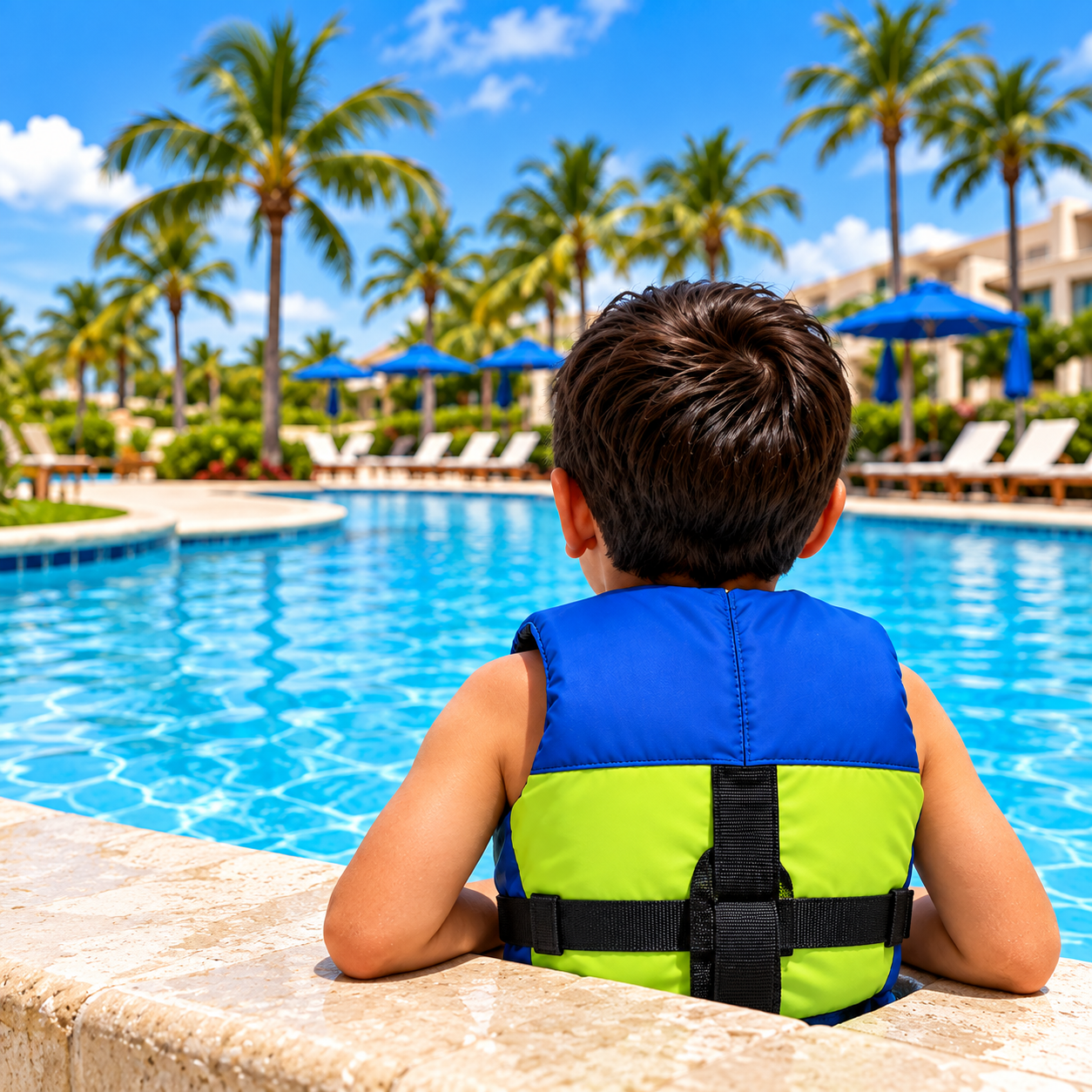
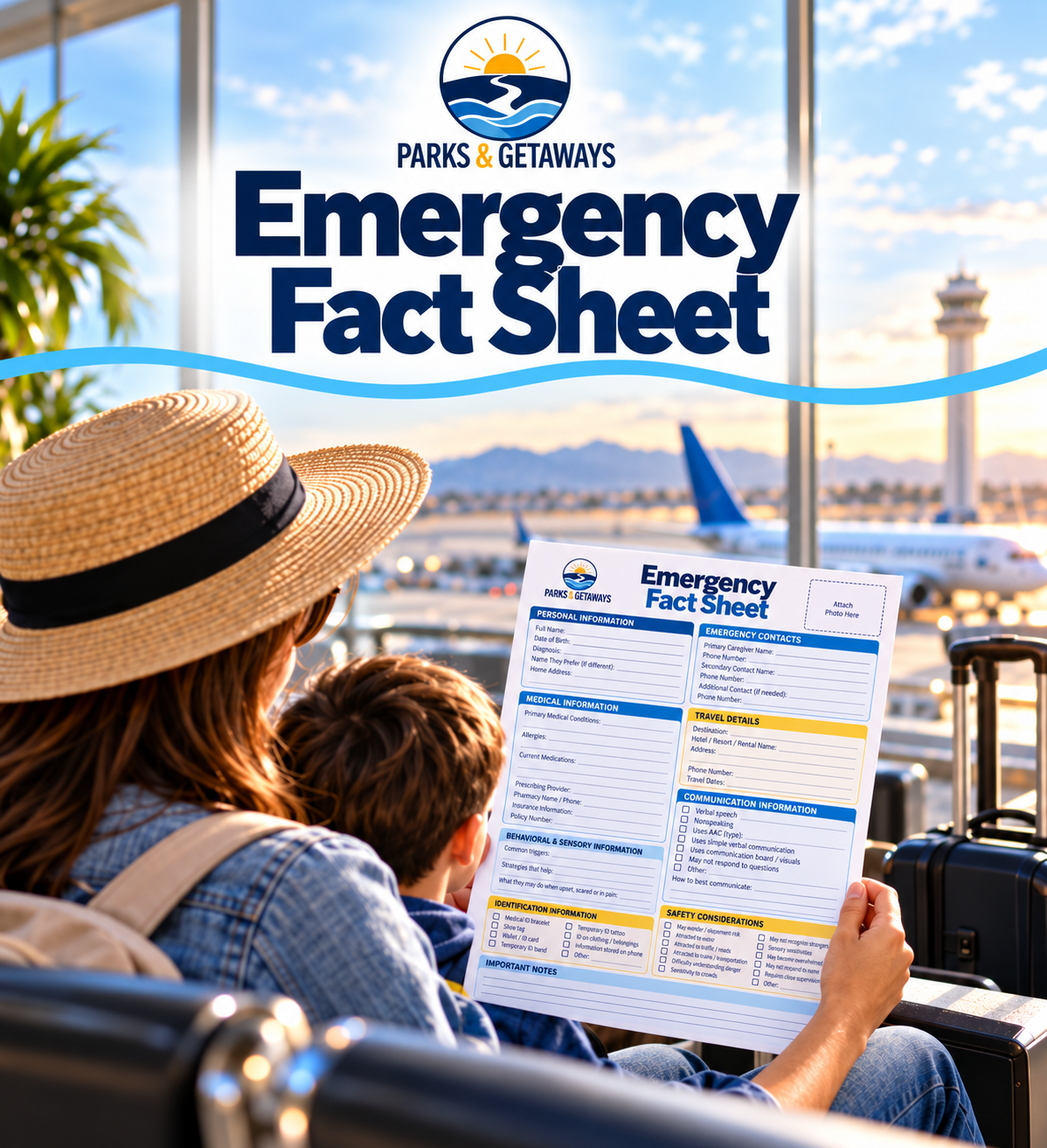
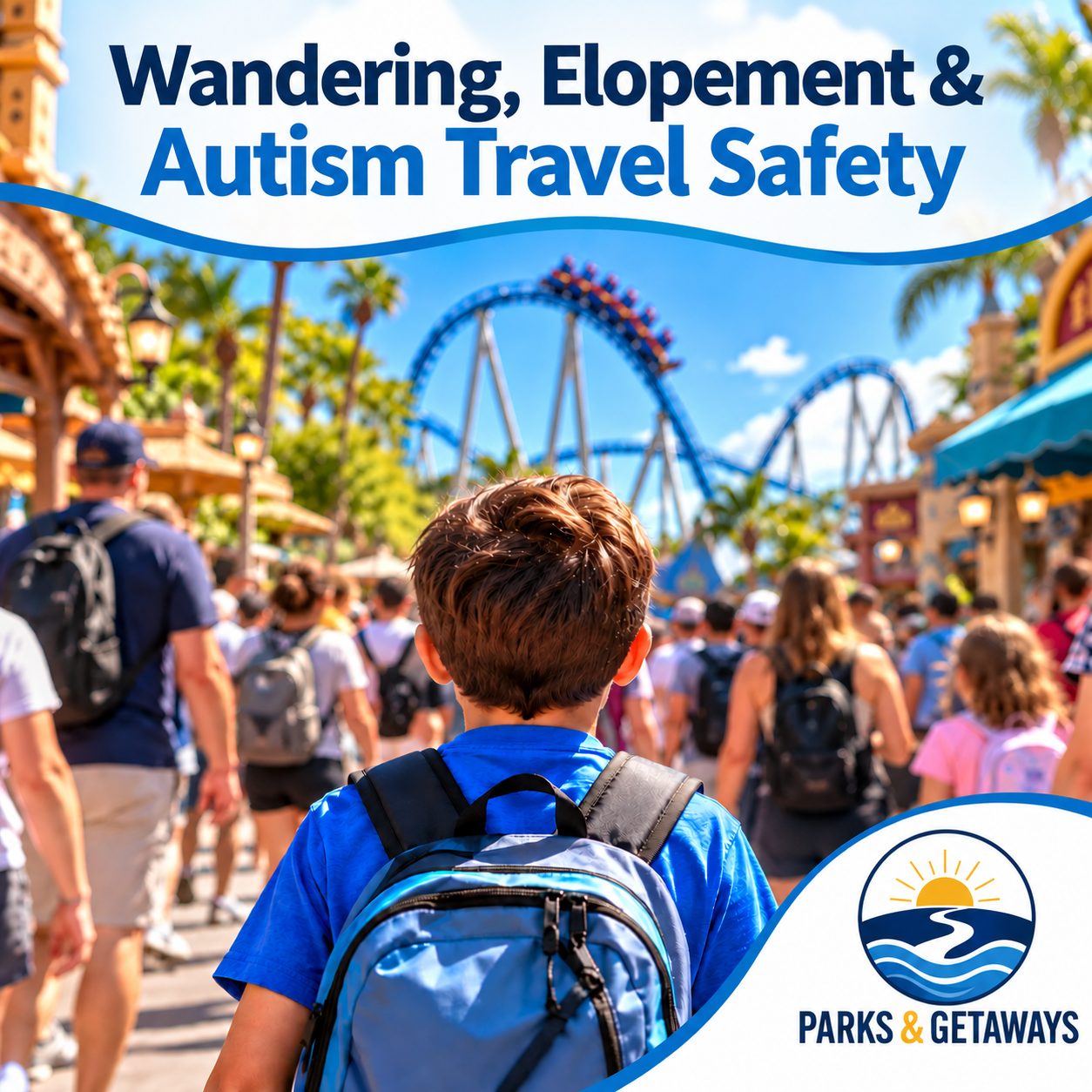
Travel brings new experiences, but it also means unfamiliar environments, changes in routine, crowded spaces, and places that may be difficult to navigate. For a person with Autism who wanders, elopes, or may become separated from their family or caregiver, these changes can create additional safety concerns. Airports, hotels, theme parks, beaches, cruise ships, vacation rentals, and busy city streets all present different risks.
Planning for wandering and elopement while traveling is not about avoiding travel. It is about anticipating what could happen, building safety skills before the trip, putting layers of protection in place, and having a clear plan if separation occurs. No single strategy can prevent every incident, so the strongest approach combines preparation, supervision, identification, technology when appropriate, and an emergency response plan.
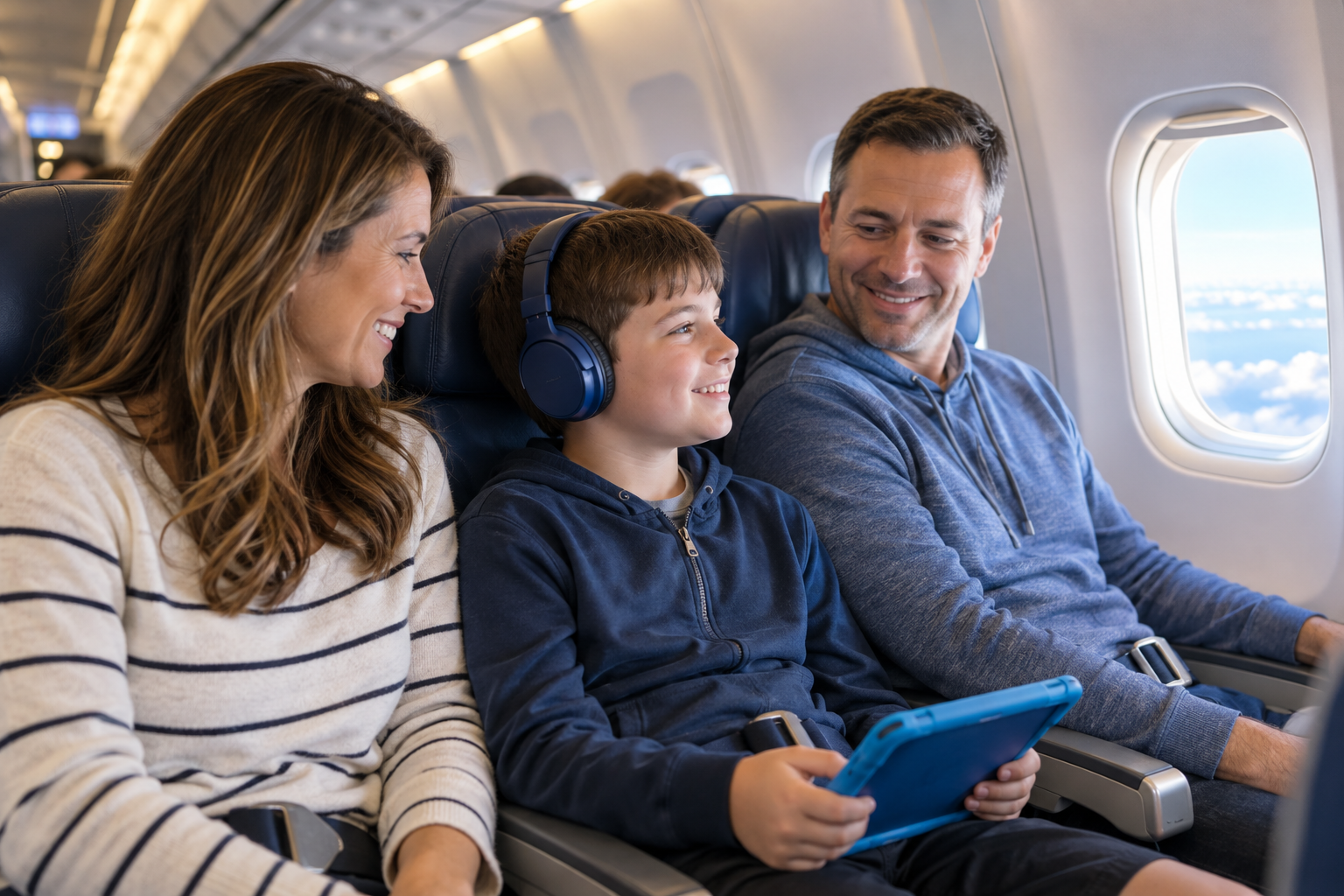
Air travel can involve a lot of uncertainty: unfamiliar spaces, crowds, security screening, waiting, announcements, changes in plans, and the sensory experience of being in an airport and on an airplane. For a person with Autism, those parts of travel may require additional preparation and support.
The good news is that airports across the United States are offering more resources for travelers with Autism, developmental disabilities, sensory needs, and other non-visible disabilities. The challenge is that every airport is different.
One airport may have a dedicated sensory room, social story, practice flight program, and trained assistance staff. Another may participate in the Hidden Disabilities Sunflower program but offer few other Autism-specific resources. Smaller airports may have very limited formal programming but can still provide accommodations or assistance when contacted in advance.
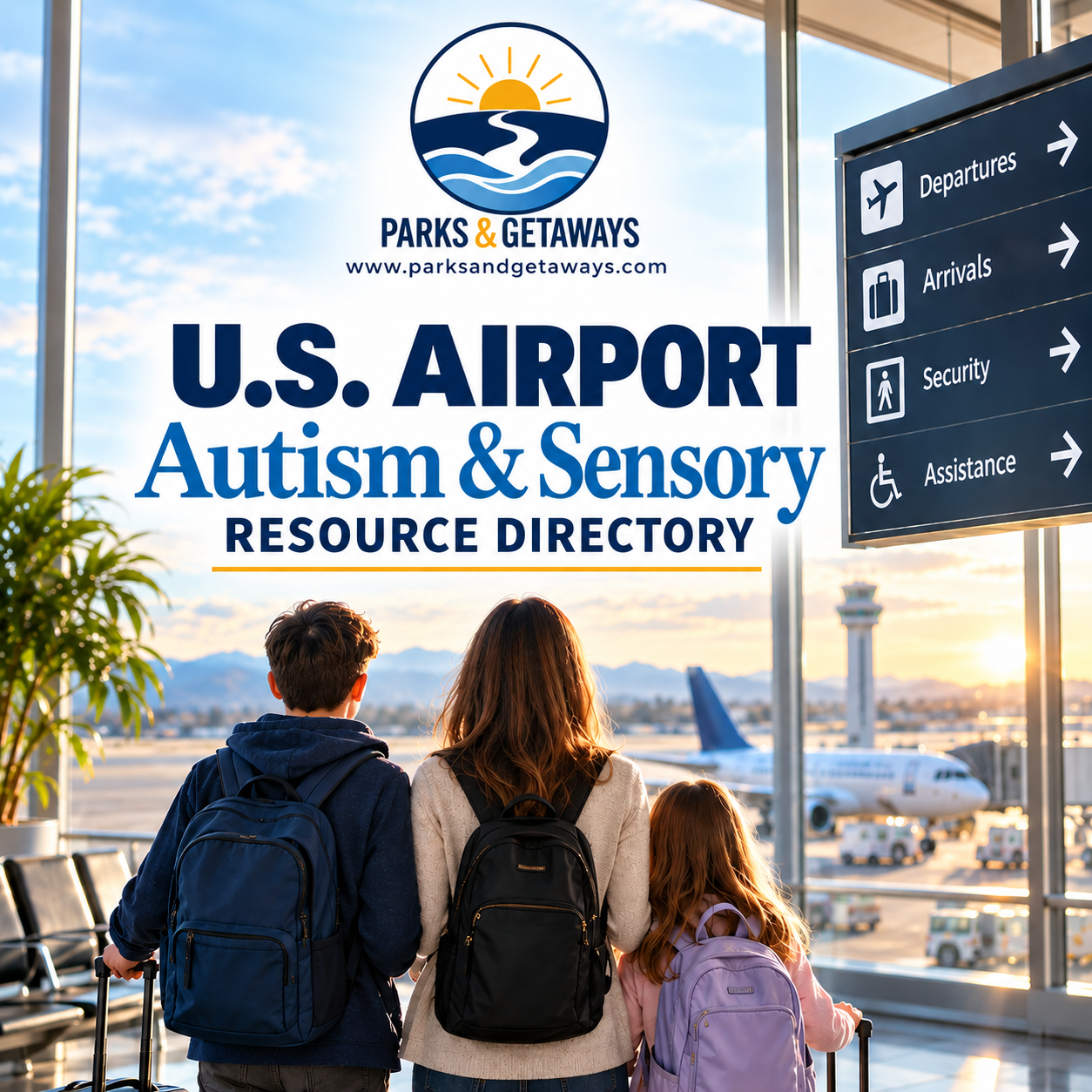
That is why we created the Parks & Getaways U.S. Airport Autism & Sensory Resource Directory.
Our directory includes 100 airports across all 50 states and is designed to help families quickly identify resources that may be available at their departure, connecting, and destination airports.